Source LED Light Hanging Strip Magnifier for Inspection Reading Repair
Source 30 LED light hanging strip magnifier units from verified Chinese manufacturers. Buyers can compare specifications including magnification levels, power supply types, and lens diameters to find the ideal device for inspection, reading, and repair tasks.
Key considerations
Products List
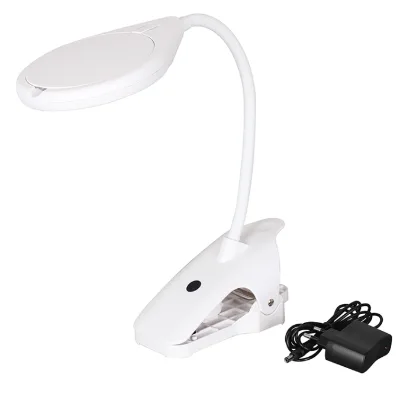
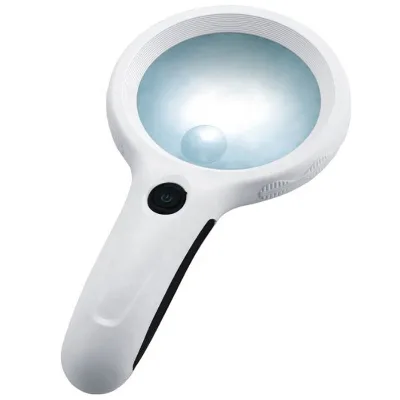





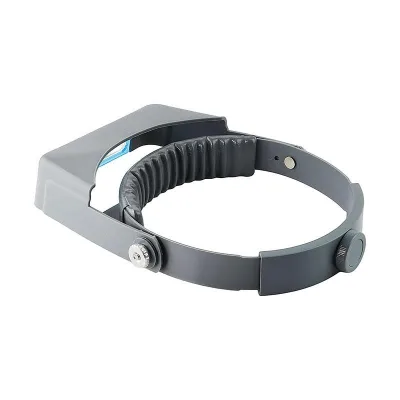



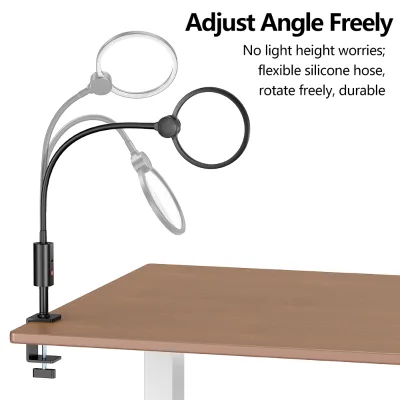


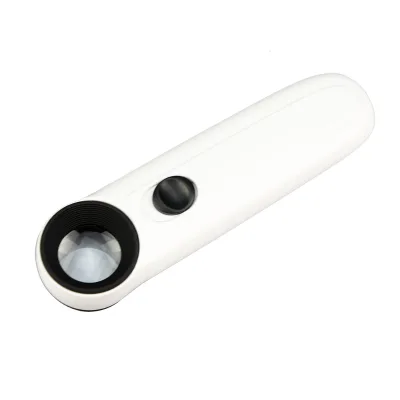
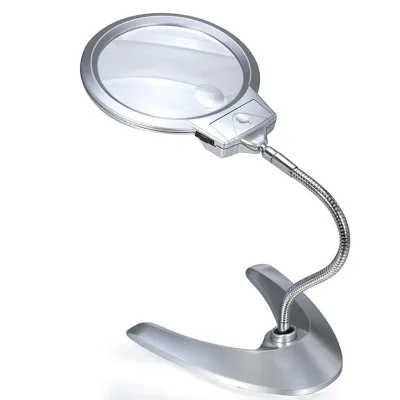
Comprehensive Sourcing Guide
Strategic Sourcing Guide for LED Light Hanging Strip Magnifiers
The global demand for precision optical tools has driven significant innovation in the lighting and magnification sectors, particularly within the niche of LED light hanging strip magnifiers. These devices are engineered to provide high-intensity, shadow-free illumination combined with variable magnification, making them indispensable for detailed visual inspection tasks. For procurement professionals, navigating the supply chain for these specialized instruments requires a rigorous understanding of technical specifications, regulatory compliance, and cost structures. This guide synthesizes available market data to provide a disciplined framework for sourcing decisions, ensuring that buyers can identify products that meet specific operational requirements without relying on unverified claims.
Technical Specifications and Optical Performance
When evaluating LED light hanging strip magnifiers, the primary focus must be on the optical and electrical architecture. The core functionality relies on the integration of light-emitting diodes (LEDs) with high-quality glass or plastic lenses. Based on observed market data, the light source configuration often involves specific SMD (Surface Mount Device) LED arrays. For instance, certain models feature an 8SMD LED configuration designed to offer two levels of brightness, allowing operators to adjust illumination intensity based on the reflectivity of the workpiece. The color temperature of these LEDs is a critical parameter for visual accuracy; observed specifications indicate a standard of 5500±500 Kelvin, which provides a cool white light that closely mimics natural daylight, reducing eye strain during prolonged use.
The magnification capabilities vary significantly across product lines, influencing the choice of equipment for specific tasks. Available units demonstrate magnification ranges such as 2.5X and 8X, or alternatively 2.5X and 5X, depending on the lens assembly. The physical dimensions of the lens are equally important; specifications show lens diameters ranging from 21mm to 90mm, with some models featuring dual-lens systems with diameters of 90mm and 22mm. The focal length is another vital metric, with observed values including 215mm and 25mm, which dictates the working distance between the lens and the object. Buyers must verify the working distance, as some manufacturers offer customization options for distances of 340mm or 500mm to accommodate different workstation layouts.
Power supply mechanisms also define the operational flexibility of these units. While some desktop models utilize an external power supply with an input range of AC100V240V and an output of DC5V2A, other handheld variants may rely on battery power, such as three AAA batteries (not included). The power consumption for larger units can range from 11 to 15 Watts, with an expected power supply time of up to 8 hours for battery-operated versions. The physical build typically involves materials such as plastic, glass, and ABS, with a color scheme often consisting of white or white and black finishes. The single package size for these units varies, with observed dimensions ranging from 22x18x12 cm to 25x15x10 cm, and weights fluctuating between 154g for handheld models and 790g for larger desktop units.
Compliance and Certification Verification
In the B2B procurement of optical and electrical devices, verifying compliance with international safety and environmental standards is non-negotiable. The market data indicates a wide spectrum of certifications held by various manufacturers, though buyers must treat these as product-specific attributes rather than universal guarantees. Some suppliers list comprehensive certification portfolios including CE, EMC, ETL, GS, LVD, PSE, REACH, RoHS, SAA, UL, and VDE. These certifications cover electrical safety, electromagnetic compatibility, and hazardous substance restrictions, ensuring the product is safe for use in diverse global markets.
However, it is crucial to distinguish between observed certifications and those that may be claimed without verification. For example, while ISOCE and general ISO standards are mentioned in specific product contexts, buyers should not assume every listed product possesses these credentials without requesting valid documentation. The presence of a CE mark is frequently observed, but the specific directive (e.g., Low Voltage Directive, EMC Directive) must be confirmed. Similarly, RoHS compliance ensures the product is free from specific hazardous materials, which is essential for environmental regulations in the European Union and other regions.
When evaluating a potential supplier, procurement teams should request a Certificate of Conformity (CoC) or test reports from accredited laboratories. The origin of the product is also a factor in compliance; observed data points to manufacturing locations in Henan and Jiangsu, China. While these regions have robust manufacturing capabilities, the specific factory's adherence to quality management systems should be validated. Buyers should verify that the product's IP rating, if claimed, aligns with the intended environment, noting that some specifications mention an IP rating for the LED type, though specific numerical ratings require confirmation.
Cost Drivers and Pricing Dynamics
Understanding the cost structure of LED light hanging strip magnifiers is essential for budgeting and negotiation. The observed price range in the market spans from $0.50 to $165.00 USD, a wide disparity that reflects differences in magnification power, build quality, certification levels, and brand positioning. The lower end of the spectrum typically corresponds to basic handheld magnifiers with simple LED arrays and plastic construction, while the higher end encompasses desktop units with advanced features like dual-brightness settings, larger lenses, and comprehensive certifications.
Several factors drive these costs. First, the complexity of the optical system, including the number of lenses and the quality of the glass, significantly impacts the price. Second, the power supply mechanism plays a role; units with integrated external power adapters and higher wattage LEDs generally cost more than battery-operated models. Third, the level of customization available, such as OEM (Original Equipment Manufacturer) and ODM (Original Design Manufacturer) support, adds value and cost. Suppliers offering these services often charge a premium for tooling and design modifications.
Minimum Order Quantities (MOQs) also influence the effective unit cost. The observed MOQ range is from 1 to 1000 units. For small businesses or prototyping phases, suppliers with an MOQ of 1 allow for low-risk testing, whereas bulk purchasers can leverage economies of scale by ordering closer to the 1000-unit threshold. Buyers should be aware that the "Selling Units" are often listed as single items, but the actual transaction may require meeting a specific MOQ to access the lower price points. Additionally, packaging costs, such as the use of color boxes or cartons, and the single gross weight of the product (ranging from 1.000 kg to higher values for larger units) affect shipping expenses, which should be factored into the total landed cost.
Typical Applications and Use Cases
The versatility of LED light hanging strip magnifiers makes them suitable for a broad array of professional and industrial applications. The primary use cases identified in the market include checking and reading tasks, where high magnification and clear illumination are critical. In the electronics manufacturing sector, these tools are used for inspecting printed circuit boards (PCBs), soldering joints, and micro-components. The 2.5X to 8X magnification range allows technicians to identify defects that are invisible to the naked eye, ensuring high-quality assembly.
Beyond electronics, these magnifiers are widely utilized in the jewelry industry for examining gemstones, setting stones, and assessing metalwork. The cool white light with a color temperature of 5500±500K enhances the brilliance of stones and the luster of metals, providing a true-to-life view of the item. In the medical and dental fields, they assist in detailed procedures requiring precision, such as examining skin conditions or preparing dental prosthetics. The adjustable brightness levels are particularly beneficial in these settings, allowing practitioners to reduce glare and improve visibility.
General applications also extend to hobbyist activities, such as model building, stamp collecting, and philately. The lightweight nature of some models (154g) makes them portable for field use, while the heavier desktop units (790g) provide stability for stationary workstations. The working distance customization, with options for 340mm or 500mm, allows these tools to be integrated into various workstation designs, accommodating different ergonomic needs. Whether for industrial quality control, professional repair, or personal hobbies, the specific application dictates the required magnification, lens size, and lighting configuration.
Supplier Evaluation and Sourcing Strategy
Selecting the right supplier is a critical step in the procurement process. The market data indicates that brand names such as "Srate" and "Netural" are present, but buyers should prioritize suppliers who demonstrate transparency and reliability over brand recognition alone. Key evaluation criteria include the supplier's ability to provide OEM and ODM services, their adherence to the observed certifications, and their track record for quality consistency. Suppliers offering customized support are often better equipped to meet specific client requirements, such as unique working distances or specialized lens configurations.
When assessing potential partners, buyers should request detailed product specifications that match the observed attributes, such as the 8SMD LED configuration, specific magnification ratios, and material composition. It is vital to verify the place of origin, as products manufactured in Henan or Jiangsu, China, may have different logistical and quality control profiles. Suppliers should be able to provide evidence of their production capabilities, including the ability to meet the observed MOQ ranges and lead times.
Communication is another key factor. Suppliers who clearly articulate their product attributes, such as the single package size and weight, demonstrate a professional approach to logistics. Buyers should also inquire about the warranty terms, as a standard 1-year warranty is observed in the market. This warranty should cover defects in materials and workmanship, providing a safety net for the buyer. Finally, buyers should avoid suppliers who make unverified claims about performance or certifications. Instead, they should rely on documented evidence and third-party test reports to validate the supplier's capabilities.
Quality Control and Long-Term Procurement Considerations
Implementing a robust quality control (QC) strategy is essential for ensuring the reliability of LED light hanging strip magnifiers. Given the variation in observed specifications, such as lens diameters ranging from 21mm to 90mm and weights from 154g to 790g, buyers must establish clear acceptance criteria before production begins. QC checks should include visual inspections for defects in the plastic, glass, and ABS components, as well as functional tests of the LED lighting system to ensure the two-level brightness works as specified. Electrical safety tests should be conducted to verify the input/output voltage ranges and the integrity of the power supply.
Long-term procurement considerations involve building a sustainable relationship with suppliers who can maintain consistent quality over time. This includes monitoring the supplier's ability to adhere to the observed standards, such as CE, ISO, and RoHS, and ensuring that any changes in the manufacturing process do not compromise product performance. Buyers should also consider the lifecycle of the product, including the availability of replacement parts like LEDs or lenses. The single gross weight and package dimensions are critical for logistics planning, and buyers should ensure that the supplier can maintain these specifications to avoid unexpected shipping costs.
Furthermore, the market data suggests that some products may have a "Neutral" brand status, which implies they are generic or white-labeled. Buyers should be cautious with these products and ensure that the underlying quality meets their standards. The presence of certifications like CE, EMC, and UL provides a baseline for safety, but continuous monitoring is necessary to ensure ongoing compliance. By focusing on these quality control measures and long-term strategic planning, buyers can secure a reliable supply of LED light hanging strip magnifiers that meet their operational needs and regulatory requirements.
Comparative Analysis of Product Attributes
To facilitate informed decision-making, the following table summarizes the key observed attributes of the LED light hanging strip magnifiers available in the market. This comparison highlights the diversity in specifications and helps buyers identify products that align with their specific requirements.
| Attribute | Observation A (Desktop/High-End) | Observation B (Handheld/Low-End) | Observation C (General/Custom) |
|---|---|---|---|
| Magnification | 2.5X, 8X | 2.5X, 5X | Customizable |
| Light Source | 8SMD LED (2 levels) | 8 LED + 1 UV | SMD LED (11-15W) |
| Lens Diameter | 90mm, 21mm | 90mm, 22mm | 90mm |
| Power Supply | AC 100-240V (Ext. Adapter) | 3 AAA (Not Included) | DC (Battery/Adapter) |
| Weight | 790g | 154g | 1.000 kg (Gross) |
| Material | Plastic, Glass, ABS | Plastic, Glass, ABS | Plastic, Glass, ABS |
| Certification | CE, ISO, RoHS, UL | CE | CE, EMC, ETL, GS, etc. |
| Working Distance | 340mm or 500mm | Standard | Customized |
| Color Temp | 5500±500K | Standard | Cool White |
| Origin | Henan, China | Jiangsu, China | Various |
This table underscores the importance of verifying specific attributes against the buyer's needs. While some products share common features like material composition and color temperature, others differ significantly in power supply, weight, and certification levels. Buyers should use this framework to filter options and request detailed specifications for any product that appears to meet their criteria. By doing so, they can ensure that the final selection is not only cost-effective but also technically sound and compliant with all necessary regulations.
FAQs
What power supply options are available for these magnifiers?
Some models use an external power supply with AC100V~240V input and DC5V~2A output, while others rely on three AAA batteries not included. The specific power mechanism depends on whether the unit is a desktop or handheld variant.
Which certifications are commonly listed for these products?
Common certifications include CE, EMC, ETL, GS, LVD, PSE, REACH, RoHS, SAA, UL, and VDE. Some listings also mention ISOCE or general ISO standards, but buyers should verify specific documentation for each item.
How can I customize the working distance for this device?
The working distance can be customized to 340mm or 500mm depending on the manufacturer's capabilities. This customization is often available for OEM and ODM orders to fit specific workstation layouts.
What is the typical magnification range for these magnifiers?
Magnification ranges typically include 2.5X and 8X, or alternatively 2.5X and 5X. The specific ratio depends on the lens assembly used in the particular model being sourced.
Can I find these magnifiers with OEM and ODM support?
Yes, OEM and ODM support is available for many models. Suppliers offering these services allow for branding and design modifications to meet specific client requirements.
What is the standard warranty period for these devices?
A standard 1-year warranty is observed in the market for these products. This warranty typically covers defects in materials and workmanship for the specified period.